Tariffs, Trade, and What We’re Watching
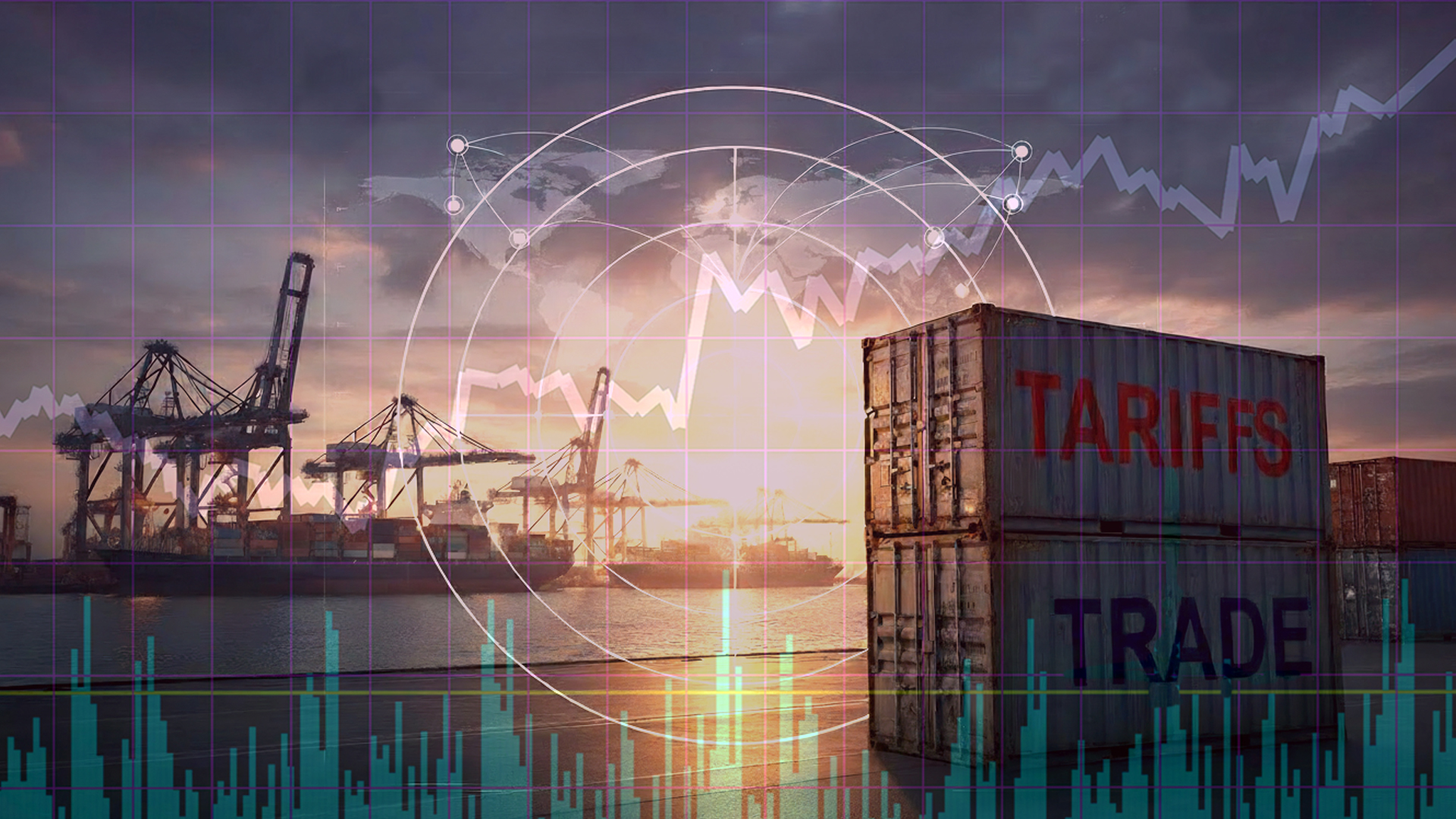
Trade policy has moved to the center of the economic conversation, and with good reason. The tariff increases announced in early 2025, and the ongoing negotiations that followed, represent a meaningful shift in the cost structure facing many U.S. businesses. We want to explain how we think about this environment, what it means for our portfolio decisions, and where we think the real risks lie.
What Tariffs Actually Do
A tariff is a tax on imported goods. The company importing those goods pays the tariff, and depending on the competitive dynamics of their market, they may pass some or all of that cost on to their customers, or absorb it in their margins.
The immediate, first-order effect is straightforward: tariffs raise costs for businesses that rely on imported inputs, and they raise prices for consumers who buy imported goods. The second-order effects–how businesses adapt, how trading partners respond, how supply chains reorganize–are more complicated and take longer to materialize.
The political debate around tariffs tends to focus on their protective effects: shielding domestic industries from foreign competition, or applying economic pressure on trading partners. Those are legitimate policy discussions. Our concern, as portfolio managers, is narrower: how does this affect the profitability of the specific businesses we own or are considering?
How We Evaluate Tariff Exposure
When we evaluate a business, one of the questions we ask is: where does it source its inputs, and where does it sell its products? A company that manufactures domestically and sells domestically has very different tariff exposure than one that imports components from Asia and exports finished goods to Europe.
We also look at pricing power; that is, the ability of a business to pass cost increases on to customers without losing them. A company with strong pricing power can navigate a tariff-driven cost increase more easily than one operating in a highly price-sensitive, commodity-like market.
Return on equity (ROE) remains our primary screen. Tariffs can compress margins, and margin compression shows up in ROE. A business with a strong, sustainable return on equity typically has the underlying economics to absorb or adapt to cost shocks. A business with thin margins and no pricing power does not, and tariff pressure can be the thing that exposes that vulnerability.
The Uncertainty Problem
What makes the current environment particularly difficult to navigate is not the tariffs themselves, but the uncertainty about where they will be set, for how long, and which industries will be exempted or targeted next.
Businesses make capital allocation decisions based on assumptions about their cost structure. When those assumptions can change overnight based on a policy announcement, it becomes harder to plan, harder to invest, and harder to commit to multi-year projects. We see this caution showing up in corporate guidance, and we think it represents a genuine drag on economic activity that is separate from–and, in some ways, more important than–the direct cost of the tariffs themselves.
This is not a new dynamic. Uncertainty about the rules of the game has always been bad for business investment. What is different today is the scope and speed of the policy shifts, which makes the uncertainty harder to model and harder to plan around.
What This Means for Our Portfolios
We are not attempting to predict the outcome of trade negotiations, and we are skeptical of anyone who claims to. Our job is to own good companies at reasonable prices, and to be thoughtful about the risks those companies face.
In this environment, we are paying particular attention to supply chain concentration — companies that are heavily dependent on a single country or region for critical inputs. We are also watching how individual companies are responding: those that are actively restructuring supply chains or renegotiating contracts may be better positioned than those waiting for the environment to stabilize.
We are also mindful that tariff-driven price increases can interact with inflation in ways that complicate the Federal Reserve’s job. If goods prices re-accelerate due to import costs, it puts the Fed in a difficult position–inflation is coming from a supply-side shock rather than from excess demand, and raising interest rates is a blunt instrument for that problem. We are watching this dynamic carefully.
The Bottom Line
Tariffs create winners and losers, and the distribution shifts depending on which sectors are targeted, which exemptions are granted, and how trading partners respond. We don’t think they are uniformly good or bad for markets. They are a cost and an uncertainty, and like any cost or uncertainty, they matter most at the margin, for businesses that don’t have much room for error.
The businesses we want to own have room for error. They have durable competitive positions, strong returns on capital, and manageable balance sheets. Those qualities don’t guarantee immunity from trade disruption, but they make a business resilient enough to adapt, and that adaptability is exactly what you want when the rules of the game are changing.
We will continue to write about this as conditions evolve. In the meantime, if you have questions, please reach out to us directly.
The opinions expressed are those of Muhlenkamp and Company and are not intended to forecast future events, guarantee future results, or offer investment advice. Investing involves risk. Principal loss is possible.